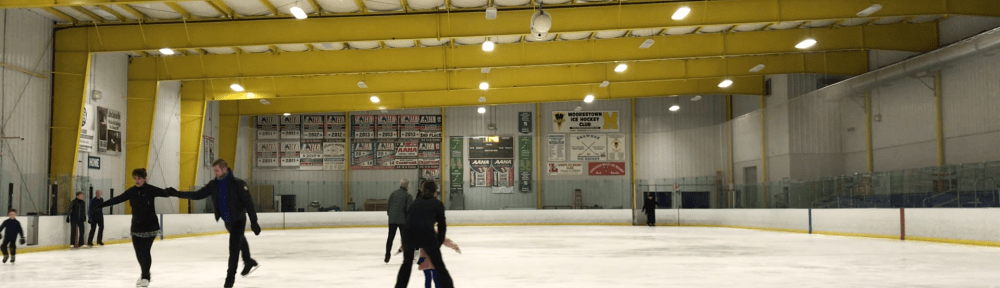
This post is the final project for the course “Visible Evidence: Documentary Film and Data Visualization,” in the Department of Anthropology at Princeton University, Spring 2019. WordPress does not allow embedding of data visualizations, unfortunately, so I have included web links to the charts, instead. If you have a Princeton NetID, you may visit the original post, complete with all the pretty pictures (!!), here: Wei Gan Project.
[The documentary clips I present in this project are parts of a single film. When viewed sequentially and all together, these ten parts tell a slightly different story for a different audience from their incarnation here. The video in its entirety has a different feel and a different purpose, and these differences highlight interesting questions about data, sense-making, re-presentation, and narrative and its excesses and exuberances. Music accompanying each clip are either in situ or has, at one time or another, served as the real-life soundtrack to sessions on the ice. In making the film, I felt as if I was going back in time, or time was circling back on itself. I found myself wanting to create a kind of sensorium that evokes remembered moments and makes it possible to re-live them. The film, in full, tells at least three stories: my interlocutors’, the rinks’, and mine: what we saw, what we felt, and what we wanted to remember. Ultimately, however, I wonder if the final product is nevertheless my own self-reflection. If possible, I will ask my interlocutors to take the camera. I shared all or parts of the video with some of them, but the making of it was not a fully collaborative process. You can view the film in full here.]
“This Way and That Way” [1/10]
I first met Ira in the winter of 2018, a little over a year ago, when I picked up my ice skates after a ten-year hiatus and walked into the Hobey Baker Memorial Rink. Princeton – being Princeton – had its very own rink, a beautiful structure with enormous windows that opened up to the morning sun. It had a nice, four-days-a-week skating schedule, with the rink nearly always empty, a clean expanse of ice on which anxieties might suddenly be forgotten, sloughed away by the cold air like layers of old skin. I had a late start as a figure skater (eighteen, as opposed to, say, three), but it was something I had loved dearly, from afar, since I was a little girl. About a week after my (triumphant!) return to the ice, my ancient, cheaply made recreational skates broke, and on a whim I decided to go all out and acquire a professional pair heat-molded to my feet.
Usually a private skater who keeps to myself, I began chatting with Ira each time I skated at Baker. Looking back, I wonder if there is something efflorescent about an affective commitment to a hobby that opens one up to otherwise foreclosed social relationships. At least it seems so, for me. But Ira was easy to talk to, a friendly man who glided up and spoke to everyone. He was “sixty-six-and-a-half” when I first met him. He seemed to know all about the Baker schedule. He knew Seth, our zamboni driver. His was the music that played out of the speakers in the eaves. I learned that he skates six days a week, alternating between Baker and several other rinks near Princeton, and that Baker would close for the season far too soon for my liking. I had just started skating again! I have new skates! I don’t want to and can’t stop skating now! What would I do with no ice and no way to get to ice elsewhere? And so Ira offered me a seat in his car.
Ira and his car gave me the chance to get to know most of the available rinks in the area. Ira also knew everyone everywhere, and he introduced me to this person and that as the girl who “also skates at Baker.” Through him, I began to glimpse something more than just random people showing up to random rinks whenever there was public ice time. There was something of a network of spaces – Baker, Protec, Proskate, Igloo, Bridgewater – and something of an association of skaters that linked people, places, and temporalities together. When I began this semester’s project, I thought to build my ethnography around Ira as my main interlocutor and the lens through which to portray this skating “scene.” But, as another interlocutor would say to me much, much later, “You found a whole community, didn’t you?”
The first part of the video below follows Ira as he arrives at Protec. I chose this rink because it was the first one to which Ira took me, after Baker closed. The location is not important, however; rather, it is the arrival itself and the acknowledgment of folks who knew him. The video also signifies my own arrival – my introduction, and my visibility – to the adult figure skating “scene.” The montage sequence, first based at Protec and then moving on to Igloo, includes shots of me with other skaters. I wanted to show the movement of my own discovery of this “whole community” as it paralleled Ira’s years ago. What did I see? And what does it feel like for the anthropologist to be seen by her interlocutors, in return?
The second part of the video is an idiosyncratic summary of the rinks at which many of us (my interlocutors, including Ira, and I) alternately gather to skate. I will discuss the significance of ice, rather than rink – further on in the post below.
“Other People, Other Rinks” [2/10]
The material I gathered for this project reflects my gradual shift in focus, from a single person to a local setting to the international field of elite competitive skaters. After following the World Championships this year, I became interested in the careers of the skaters I watched perform. The International Skating Union, the governing body of the sport, changed its scoring system in the early 2000s and implemented it worldwide in 2004. The purpose was to minimize judicial bias and to standardize evaluation criteria, honing in on the execution of each specific element (e.g., “change foot flying sit spin,” “choreo sequence 1”) instead of sweeping “technical” and “artistic” scores based on a six-point scale.
The following are charts depicting the scores of up to the top ten placements in every ISU international Senior-level competition from the 2004/2005 through the 2017/2018 season (a total of fourteen seasons). These include scores from four Winter Olympic Games. I omitted the most recent season, just concluded, because ISU adjusted its scoring once more this past year. Charts are organized by discipline: Men, Ladies, and Pairs. (I have also omitted Ice Dancing because its elements are dissimilar to the other three disciplines.)
Each chart shows the overall score (top line) and its breakdown into the short program and free skate scores. [WordPress does not allow embedding of data visualizations, unfortunately.]
Some observers contend that the ISU Judging System encourages higher athleticism (e.g., increasing quantities of higher revolution jumps) at the expense of artistry. The level of skill exhibited by Tara Lipinski, who remains the youngest Olympic gold medalist (age 15 and 255 days, Nagano 1998 – the skater and event that introduced me to figure skating), would not go very far even in national competitions today. For the Men’s competitive field, especially, quadruple jumps have become almost required elements in the last few years, with those who can land only three-revolution jumps slowly falling by the wayside. In addition to the extra turn in the air, skaters are also embellishing their jumps with different take-off, mid-air, and landing positions to increase the level of difficulty – and thus augment their scores.
Below, during the 2017/2018 season, one of the youngest competitors in the senior men’s field, Vincent Zhou – age 17 – lands the first-ever quad lutz jump in any Olympic Games. This is a quadruple-lutz-triple-toe-loop combination, the most difficult jump combination (00:30):
[via @rani]
Vincent debuted as a senior skater in international competition in the 2017/2018 season and placed sixth at the 2018 Olympics. His highest scores, from the 2018/2019 season, fall outside of the ISU scoring cutoff of my database. Still, I wonder, do age, career progress, and familiarity with the (once new) ISU Judging System correlate with competition scores? It is difficult to statistically control for the increased athleticism, especially due to the entry of younger competitors; clearer patterns might emerge with scores over the next few seasons.
The charts below depict the performance of athletes who placed in the top ten in international competitions in Men, Ladies, and Pairs. I tried to demonstrate some relationship (or not) between the number of years with top-ten placement, the total number of events competed, and the percentage of those events in which a skater medalled (gold, silver, or bronze). Do older skaters have longer careers because they kept medalling? Or do skaters medal more frequently with more experience? How do younger skaters who have been doing quad jumps for years, just entering the field, stack up against older skaters? Please hover over each circle for additional information, including each athlete’s average number of events competed per year.
I then pulled the top ten overall scores achieved in each discipline over the fourteen seasons and tracked the careers of the competitors who performed those programs. Again, these charts include only the scores that earned up to tenth place. The first set of charts shows season’s best scores as a comparative measure of career highlights, while the second set of charts plots the skaters’ scores at each competition. The latter illustrates the ups and downs of individual competitors and the seasonal gaps in between. The second set also includes data on the top ten scores as well as the ages of competitors. These charts, along with the “Performance” charts above, reveal the state of the field in each discipline. For instance, the highest scores in Ladies appear much more recently, by skaters who have just begun their careers. The top male skaters seem to enjoy more sustained careers.
Season’s Best – Pairs
Career Scores of Top Competitors – Men
Career Scores of Top Competitors – Ladies
Career Scores of Top Competitors – Pairs
[Pairs skaters often begin as singles competitors. They also sometimes change partners mid-career, which accounts for the ages of the competitors above. Each skater of the three older duos had previous partners with whom he/she competed internationally. Pairs skaters do also end up as couples; Tatiana and Maxim are married…]
Some technical elements, particularly jumps, are more achievable biophysically for the male phenotype, which accounts for the gap in scores between Men and Ladies. The charts above also show how the increased athleticism effected the greatest impact on Men’s figure skating, while the other two disciplines are seeing much subtler upward trends in scores. The first quadruple jump ever landed in international competition was completed by Kurt Browning in 1988. Today, Nathan Chen, age 20, is christened the “Quad King,” landing as many as six quad jumps per program. For Ladies, by comparison, the first quad jump landed internationally by a Senior athlete wasn’t until this past season, in March, 2019 (although Juniors have been attempting them for years – with only two ever landed in international competition).
In recent years, however, young girls have begun training earlier and earlier for difficult elements (resulting in debates regarding their wellbeing). One such skater is a young lady named Isabeau, age 12, who trains at Igloo in Mount Laurel, one of my local rinks. She is coached by Yulia, and both appear in the clip “Technique.” On one occasion, Yulia proudly showed off one of Isabeau’s training videos on her phone to a group of adult skaters, including me. She told us that Isabeau will begin training quads very soon, well ahead of her fellow American skaters, because only about one percent of girls in the United States are doing quads while ninety percent of Russian girls younger than Isabeau are already landing them consistently. Eteri Tutberidze, one of the most preeminent Russian coaches, described the work of her students as “moving the limits” of female figure skating.
Here is one of Tutberidze’s students, Alexandra Trusova, age 13, landing a quad lutz in practice. Tutberidze also coaches Alina Zagitova, 15 when she won the 2018 Olympics (and one of the top female athletes in the charts above) – who, unfortunately (or fortunately?), is not doing quads…
Here is Elizabet Tursynbaeva of Kazakhstan, age 19, landing a quad salchow at the 2019 World Championships (00:50). Although this performance is not included in my database, this jump was the first-ever quad landed by a Senior lady in international competition:
[via @BossT Channel]
For comparison, here is Carolina Kostner of Italy, who debuted at the senior international level in 2002. Below is her short program at the 2018 Olympics, in which she placed fifth. She was 31:
[via @Buta Orjonikidze]
There are obvious differences in technical proficiency, but what of artistry? Has figure skating lost some of its beauty with the relentless push to jump higher and faster, to do fancier and flashier things?
For Men, here is Vincent Zhou again, at the 2019 Four Continents Championships. 2018/2019 was his second season as a Senior competitor, but just one year made a significant difference in both his technical skill and artistic presentation (compared to his Olympic performance, above):
[via @Brau Avitia 3]
Here is Javier Fernandez, another one of the top athletes from the charts above, performing a quad-toe combination at the 2018 Olympics (00:45). He was 26, just shy of 27, a decade older than his competitor Vincent Zhou (Javier placed third while Vincent placed sixth). Javier retired during the 2018/2019 season, after ten years on the senior international competitive circuit.
[via @Olympic]
Finally, here are Sui Wenjing and Han Cong, a top pairs duo from my charts above, at the 2017 World Championships, at which they won the gold medal. They perform a quad twist (00:40) and a throw triple salchow (02:35):
[via @мой канал]
Back at Igloo in Mount Laurel, Isabeau’s coach, Yulia, whom I mentioned above, is also working with a little girl named Valerie, age four. Under Yulia’s tutelage (if Isabeau’s accomplishments are any indication), Valerie is well positioned to join the ranks of the next generation of top Ladies figure skaters (representing what country, though?). Her mother accompanies her to the rink every day and sometimes joins her daughter on the ice, letting the four-year-old coach her. Below is a video of Valerie practicing her program, which she performed at a local competition in May. She runs through the routine at least once during each rink session, and the clips here are pulled from three separate iterations of her dress rehearsals – hence the beautiful blue dress. Off screen, Yulia can be heard giving instructions in Russian as Valerie goes along:
“Valerie” [3/10]
Despite the inherently competitive nature of figure skating as a sport, there is friendship and camaraderie between national teammates as well as international competitors. Many elite skaters join the casts of Stars on Ice, one of several professional shows, after each season. Fierce rivalries are transmogrified into off-season goofiness (see the Stars on Ice Instagram account). Nation-states and patriotism are big factors in the sport, but an in-depth analysis is beyond the purpose of this project. It is interesting just to note that athletes native to one country sometimes skate for another, obtaining residency or even citizenship along the way. Skaters also train outside of their own countries for various reasons, but most often to work with particular coaches. There are also only so many elite choreographers in the entire sport, so rivals sometimes not only train at the same rink but also skate programs crafted by the same people. The map below shows the training locations of each of the twelve top competitors (from the charts above) and includes information about support personnel and hours spent in training. Please click on the pins for the Infowindows; flags refer to the country that the athlete represents, and pin size reflects the highest score achieved.
https://weigone.carto.com/builder/1d0fa899-028e-4b56-a1e8-40884bd29e8a/embed
[The pins were originally dropped on the exact location of the training facilities (when the information was available), but some of the athletes train together at the same place, so overlapping pins obscured those underneath. In order to make visible all twelve competitors at once, I rearranged the pins; those clustered around the same city, therefore, are not accurate visual representations of location. Icons are made by Freepik, from www.flaticon.com, and licensed by CC 3.0 BY.]
Brian Orser and Tracy Wilson are two renowned coaches at the Toronto Cricket Skating and Curling Club, and, aside from the three listed on the map (Evgenia Medvedeva, Yuzuru Hanyu, and Javier Fernandez), they have worked with many other current international-level skaters. Prominent coaches also travel around the world to host skating seminars; Brian was just recently in China and ran a workshop on edge work with the national team. In April of this year, Vincent Zhou’s coach, Christy Krall, visited Protec in Somerset, one of my local rinks, for such a seminar, and I was fortunate to take part:
[Christy utilized the software program Dartfish (discussed briefly below) to help with analyzing jump techniques. Her tech setup is visible to the left of the frame.]
Georgian ice dancer, Otar Japaridze, in preparation for the Olympics, moved to New Jersey ten years ago to work with elite coach Evgeni Platov, a two-time Olympic gold medalist. He trained up to thirty hours a week at Proskate in Monmouth Junction, another one of the local rinks I frequent. His partner, Allison Reed, is an American who received a Georgian passport, and the duo competed for Georgia at the 2010 Winter Olympics (Allison’s siblings skated for Japan). Otar then teamed up with Angelina Telegina and trained full-time at Igloo, in Mount Laurel. Igloo’s skating director is a former two-time U.S. Pairs national champion and tenth-place Olympian, and he runs an elite international training program at the rink. Several other Olympians also trained here and subsequently stayed on as coaches (e.g., Nick Buckland). Otar and Angelina competed throughout the 2013/2014 season but did not qualify for the 2014 Olympics. After retirement, they married each other and “made a home” in Mount Laurel (as one of my interlocutors explained), and both currently coach at Igloo. Below is Otar and Angelina’s free skate from the 2013 Ukrainian Open:
“Otar and Angelina” [4/10]
[Not long ago (perhaps inspired by viewing a rough cut of my film), Ira played the tango from this performance at the beginning of his lesson with Otar, while Angelina was also on the ice working with Valerie. Both immediately recognized and reacted to the music, which prompted a few laughs from the rest of us.]
I first learned of Otar last spring, when Ira listed all the coaches worth enlisting in the area. He was still working with Andrea at Protec at the time, but two other interlocutors, Judy and Elizabeth, were skating with Otar, and I heard all about it via Ira. While I was away in the field last summer, Ira switched to Otar as his coach (“abandoning” Protec) and began skating regularly at Igloo for this reason. As Ira is still my ride to the rink, I began to skate at Igloo, too, which then became the main site of my documentary project.
“Now that I work with Otar” [5/10]
As any aspiring figure skater would attest, fancy things are cool and everybody wants to do them. Just recently, one of my interlocutors, Jane, an adult skater and Yulia’s student, asked me about her broken leg sit-spin. She said, “I want to do something fancy! I want Yulia to teach me something fancy!” Me, too, I echoed. When I first started skating, I was fortunate to find two very good coaches at a rink in North Carolina, and they helped me move through each of the jumps and spins in turn. I felt fancy! And I eschewed all exercises like a musician might avoid doing arpeggios. Upon my return to the ice, however – and, perhaps, with age – I finally understood that there are basic things about balance and body posture that I was too impatient to work on and so generally dismissed. I began working with Otar, too, a few weeks ago, after Ira helped set up a lesson for me. After my first lesson, during which we did exceedingly basic things like stroking and crossovers, Otar commented, These skills will help you with everything, but no one wants to do these exercises; everybody wants to do the fancy stuff – “Because they’re boring!” I exclaimed.
In figure skating, each competitive performance begins with a short program that lasts just under three minutes, followed by a free skate of four to four-and-a-half minutes – if the skater(s) qualifies. For eight minutes in the spotlight, as glamorous and effortless as they seem, skaters dedicate hours upon hours upon hours of preparation. It has taken me my entire adult life to understand that figure skating, like everything else, can only be built up bit by bit. The basic things add up to the fancy things, just as we read Durkheim in our proseminars before getting to the stuff about rocks.
Discussions about technique are frequent and necessary conversations among figure skaters. Skating is a sport that requires very precise execution of complex elements. By execution, I mean the perfect arrangement and timing of all body parts, in motion over time and across space: skaters have no more than 0.2 seconds to get their feet together in the right position when launching into a triple jump. That’s half the time it takes to blink (0.4 seconds). They jump two feet off the ice and land at about fifteen miles per hour, on a 3/16-inch-wide blade. In the air, they turn at 450 rpm, or seven revolutions per second, aloft for no more than 0.7 seconds. The force of landing can be up to eight times their body weight – on that 3/16-inch blade, at fifteen miles per hour.
Skaters video their elements, and elite athletes use software such as Dartfish to further analyze the footage to pinpoint exactly when, where, and what something needs to be adjusted. This inherent ocular reflexivity as well as the always already performative aspect of figure skating add interesting wrinkles to the politics of representation and ethnographic filmmaking. At the rink, my interlocutors sometimes film themselves, poring over the technique of a spin or a jump. Bill and Cindy reviewed footage of their ice dance routine with Otar to evaluate the execution of each element, and they linked the quality of their performance to its presentation for an audience (see “Bill and Cindy”). Ira, as he watched the rough cut of my film, couldn’t help but comment on own his skating (sometimes positive, sometimes negative) each time it appeared on camera. On and off the ice, my interlocutors also often consult each other about positions and movements, debating, demonstrating, attempting. Otar explained to me, You have to always be aware of what you’re doing. As a deeply cognitive yet literally corporeal work on the body, figure skating technique reflects the ways in which skaters self-consciously inhabit their physicality, their space, and, ultimately, their selves.
Vincent Zhou, somewhat notorious for under-rotating jumps, wrote the following on his Instagram page after a less-than-perfect performance at the U.S. Figure Skating Championships in 2018:
“I’m proud of myself for skating two great programs and giving people a little something to have faith in me for. I’m just trying my best to do what I love without the people who dislike me weighing me down. It’s just my first year being a Senior internationally, and I’ve improved by leaps and bounds over this rollercoaster of a season. What a great way to start 2018–with better performances, a number of quads that I know were clean, and an absolutely incredible audience. Thank you all so much for your belief in me–even when I sometimes struggle to believe in myself. I gave it everything I had, and there is nothing more I can ask of myself.”
A month later, Vincent placed sixth at the 2018 Olympics.
While the conversations in the clip that follow may seem esoterically technical and of interest to no one save their participants, the underlying lesson that I took away from them and their iterations is the value of process, waiting, and being-with. Talking in the car, for half an hour on average each way, Ira taught me to think of skating as a metaphor for life itself. He used to tell me about living life “on the edge,” a cheeky (but not really) reference to edge work on figure skates. The analogy is extendable and has become more complex as – cheekily – time passed and life went on. Just as a skater must slow down and hold the edge to wait out its curve, so a person might try to be patient and live in the present, being with and “holding” instead of rushing through, thrashing about, or running away:
“Technique” [6/10]
Otar travels to Proskate for his lessons with Judy and Elizabeth. Of the adult skaters at Igloo, Otar also coaches Jane, Cindy, Bill and Cindy as a dance duo, and Dawn, who skates mostly at Protec. Bill also works on ice dancing with Angelina. Yulia, who performed the salchow, the waltz, and the flip in the video above, also coaches Jane. Two little girls, Valerie and Carolyn, share the public rink with us during their lessons with Yulia (as opposed to the freestyle rink). Carolyn has two older sisters, though, who skate on the freestyle rink. I mention this because, while we work on the public rink, aspiring Olympians are simultaneously training on the freestyle rink, just on the other side of the mezzanine. Isabeau, also Yulia’s student (and the triple-jumper in the video above), has already been invited to join the U.S. team for the 2022 Winter Olympics.
One thing that struck me about figure skating in general and the Central Jersey “scene” in particular is the recursive and para-sitic nature of the sport. The rink itself is elliptical, with ends but neither beginning nor end. Elements flow smoothly into each other rather than terminate abruptly at every conclusion. Body parts are connected, still but always in motion. Skaters work on elements over and over and over, run through their programs again and again and again, at one rink or another, with different coaches, sometimes in different states or different countries, and temporalize accordingly. I took my skates with me to China during fieldwork last year, and I shared the ice with former and aspiring Chinese international competitors. The feeling was palimpsestic. It seems that clock time and geographic space are not identifiable, not important.
Ice is the main distinguishing characteristic of each rink, as Ira and I discussed in “Other People, Other Rinks,” above. But even then, “rink” isn’t quite the locus of difference, either. Ice – not time, not space – marks each rink, but it also marks each practice session. Ice is the same everywhere (it’s just frozen water) – but not. Ice is a central topic of conversation among all of my interlocutors. Typical pre-session comments include: How is the ice today? Are they going to cut it? Bill doesn’t care, but I can’t skate on that. They brought somebody else in – I’m not sure how he’ll do the ice (talking about an unfamiliar zamboni driver). And, once on the ice: Is the ice softer than usual? The ice is so nice! This ice is crap! I’m going to have a word with Joe! The first question Ira posed to me after I tried out the rink in China was: “How’s the ice?” When I talk to other interlocutors about visiting China, they also asked, Are there rinks there? How are the rinks in China? What is significant is not “China,” or “Protec” versus “Proskate” versus “Igloo;” it is the ice.
Ice is discursive, and affective, and, also, visual:

[Courtesy of Bill and his permanent marker]
There is something of an intensity of figure skating that reproduces itself, folding together disparate people, places, and times, grafting onto nothing more than the surface of the ice – as if ice alone is enough to structure spacetime. Ice time is perhaps, phenomenologically, icetime. My interlocutors contrasted rollerblading, rollerskating, and ice skating, and all agreed: ice is better. They have also described skating as a passion. Several interlocutors “play hooky” from their jobs and run off to the rink. “It was a part of who we were,” Cindy said about her program music; the same can be said of the sport itself.
“Therapy” [7/10]
The video clip below is a compilation of skating lessons. First, I wanted to cut together lessons that circle around the perimeter of the rink to demonstrate repetition for itself, both in moving across the ice and in the moves themselves. I also wanted to show the sense of presence that saturates the ice when it is filled with people and the spirit of their work-as-passion. Ice is social; it marks difference – and is differentiated in turn – socially. My interlocutors and I, at every rink, are used to (spoiled by?) clean surfaces, open patches, and few people. Whenever “the public” become more nuisance than noticeable, someone would always gripe. Once, while putting on our skates, we were all peering anxiously around the corner: I see people coming in! And: Sharon, why did you let all these people in? They told me a party will be coming in at noon. That’s the “pond skater” (a young man who cuts up the ice in his hockey skates). They’re putting the cones out! Who are these people??! One morning, I absentmindedly drove to Igloo instead of Protec and only realized halfway that that had not been a sensible choice. I told Bill and Cindy about it and, without waiting for me to finish, Bill said, “It’s the company.”
My interlocutors never skate alone – accompanied as they are, in this clip, by their coaches. But one might argue that no one ever skates alone; there are always others on the ice who know exactly what Ira means when he says, “you’re just sort of floating through space.” Even when there is only one body on the ice, there is still the ice itself, and one’s own gaze, and the shared potential of spectatorship.
“Lessons” [8/10]
[The two musical pieces accompanying this clip are “Willow Waltz” and “Ten Fox,” from U.S. Figure Skating’s official ice-dancing test music repertoire. Jane put them on each time she had a lesson with Otar – just these two – for weeks. She – or, rather, Otar – has been adding more variety as of late, due perhaps to recent squabbles over rink music.]
Figure skating, as a governed sport (institutionalized, or, as Deleuze would say, “massified”), evolves in linear time, with the ebb and flow of generations, in an arrangement of geopolitical space. The map below shows the number of medals earned by country and by discipline. The data here aggregates all of the fourteen seasons of my database. What might be some factors that contribute to particular countries’ dominance in one discipline or another? Please hover over the skate icons for the Infowindows; for the other layers, hover anywhere within a nation’s borders).
https://weigone.carto.com/builder/4acb1286-04ba-4f58-8c69-d0c35fcb9cdf/embed
The following map tracks the changes in medal distribution from the 2004/2005 to the 2017/2018 season. A darker orange denotes higher total medals earned.
[The accompanying track introduced each group of competitors at the 2019 World Figure Skating Championships.]
I conclude with Bill and Cindy, a 72/76-year-old couple who began skating about fifteen years ago, “after,” as the announcer of the Princeton Skating Club showcase described, “a full-time working life.” They first met Ira (and Judy) at the Protec Coffee Clutch (mentioned briefly in “Now that I work with Otar,” above), and it was Bill who informed Ira that Princeton has its own rink (Ira lives in Princeton). I first met Bill at Baker, and then I got to know him and Cindy better once I began skating at Igloo. Bill and Ira have been jokingly dubbed “the kings” of Igloo – but there are also “queens,” and the latter most certainly call the shots. One day, toward the end of my fieldwork, Bill and Cindy came to the rink all dressed up. I watched them run through an ice-dance routine with Otar and learned that they were to perform at an exhibition at Princeton Day School.
The first video below is of my interview with Bill and Cindy, and the second is of their conference with Otar, which I was fortunate to be able to film. For me, this conference captures the ethic of figure skating and embodies, most of all, the love and co-presences that render the sport a work of art.
“Bill and Cindy” [9/10]
“Conference” [10/10]
[My gratitude to everyone who put up with me and my iPhone. In order of appearance: Ira, Otar, Chris, Lin, Max, Marguerite, Andre, Gail, Minka, Sharon, Jane, Joe, Carolyn, Cindy, Bill, Inga, Kecy, Judy, Wendy, Yulia, Lucy, Penny, Valerie, and Angelina.]
Music:
Chandelier – Sia
You’re the One that I Want – John Travolta and Olivia Newton-John (Grease)
Just Can’t Get Enough – Depeche Mode
Happy – Pharrell Williams
愛のオルゴール Music Box Dancre – Kentaro Haneda
String Quartet No. 15 in A Minor, Op: 132: III. Molto Adagio – Beethoven, Tokyo String Quartet
Night Sky – Brian Crain
I’m Not the Only One – Sam Smith
Come Undone – Duran Duran
Exogenesis: Symphony Part 3 (Redemption) – Muse
A Shout Across Time – Ira Mowitz
Out of the Blue – Debbie Gibson
Ten Fox 3 – USFSA
Willow Waltz 2 – USFSA
C’mon C’mon – One Direction
A Thousand Years – Christina Perri
Sun (Instrumental) – Sleeping at Last
 Wei N. Gan